Can you save what you subscribe to? Sorting out the legal boundaries of downloading subscription content
If you subscribe to a creator, saving the videos you like to your own device is something almost every subscriber has done or at least thought about. But between "I paid for it" and "the law allows it" sit three separate layers of rules — and the same act of saving can land in wildly different risk brackets depending on the setting.
This piece does not repeat how to save (that side is covered in detail by offline saving for subscription content). It only deals with the part that is easier to get wrong: which behaviours sit in the grey zone, which ones can actually get you pursued, and how to tell which bracket you are in.
The legal boundary for subscription content: three layers stacked together
Deciding whether you may save something means clearing three gates at once — the platform's terms, the technical protection measures, and copyright ownership. The three are independent, and having paid for a subscription does not make any of them disappear.
- Platform terms (the contract layer): the user agreement you accepted at sign-up is a contract between you and the platform. The official OnlyFans help centre is blunt about it: "paying does not mean owning — all content belongs to the creator", and it states plainly that the platform offers no download and that copying content from it breaches the terms of service. The usual consequence is a restricted or suspended account, and in serious cases no refund of prepaid subscription fees.
- Technical protection measures (the anti-circumvention layer): most platforms wrap their content in a layer of technical protection. In some countries, circumventing that layer is an offence in its own right — regardless of whether the content itself is copyrighted.
- Copyright (the ownership layer): the copyright in a video always stays with the creator. What you bought is a licence to watch on the platform, not a right to copy, and certainly not ownership.
Stack those three together and the result is this: the platform letting you watch does not mean it lets you copy, and copying without being pursued does not mean copying was allowed.
The real dividing line: whether the content leaves your device
The same act of saving swings from low to high risk almost entirely on one thing — whether the file stays on your own device or ends up in someone else's hands.
Ranked by how far the content travels, there are roughly three bands:
- Kept offline on your own device only: the risk sits mainly at the contract layer and may amount to a breach of the terms of service. Personal, non-commercial, unshared offline viewing barely registers in criminal or civil enforcement in most places.
- Passed to a friend, posted in a group chat, put on a cloud drive with a share link: the nature changes. This step crosses from "copying" into "communicating to the public", which touches the rightsholder's distribution right directly and upgrades a platform breach into infringement against a third party.
- Uploaded to a public site, bundled and sold, or farmed for traffic: this is the band enforcement actually watches. Under US copyright law statutory damages run from $750 to $30,000 per work, and up to $150,000 per work for wilful infringement; and the NET Act sets the bar low — copying works with a retail value above $1,000 within 180 days can be criminal even if you never earned a cent.
One example shows where enforcement focuses: in 2020 the RIAA leaned on the anti-circumvention provisions to pressure GitHub into taking down the open-source tool youtube-dl; the repository was removed, then restored on review. What gets pursued is usually the tooling and the distribution sites, not the individual watching for themselves — which is not the same as the individual's conduct being permitted.
The three "it should be fine" beliefs that are most often wrong
- "I paid for it, so the video is mine": it is not. A subscription buys a licence to watch; ownership of the content stays with the creator — this is not somebody's interpretation, it is written plainly in the platform's own help centre.
- "I'm only watching it myself, the law doesn't reach that": there is no "personal use" exemption in US copyright law. The closest case is Betamax in 1984 (recording broadcast TV for time-shifting counted as fair use), but its scope was broadcast television, and decades of case law since have never stretched it to online streaming. "I only watch it myself" may influence how damages are assessed, but it is not a defence.
- "The platform won't notice, and deleting it settles things": the question is not whether the platform knows. Once content is distributed the harm has already happened and cannot be undone; a creator can send a takedown notice afterwards, and deleting does not recall the distribution that already took place.
The same act can be classified completely differently from one region to the next
It is personal downloading that varies most by region — never apply one standard to the whole world.
- United States: no personal-use exemption; the Copyright Office's §1201 anti-circumvention provision stands on its own and applies even where the content is not itself copyrighted, though individuals acting for themselves are almost never enforced against because resources go to commercial piracy.
- Japan: one of the few countries that criminalises personal downloading. Since 2012, knowingly downloading pirated music or video has been punishable by up to 2 years in prison or a ¥2 million fine even for personal use (prosecution requires the rightsholder's complaint); from January 2021 that scope was extended to manga, magazines and academic publications.
- European Union: most member states recognise a private-copying exception, but its scope and the compensation mechanism differ country by country; the Digital Services Act separately requires platforms to take down reported infringing content promptly.
In cross-border situations the applicable test usually involves both where the rightsholder is based and where the distribution actually happens — which is why "other people do this and they're fine" can never serve as a benchmark.
The above is a survey of publicly available rules and is not legal advice; for a specific dispute, consult a practising lawyer.
If you want to keep a copy, how to keep the risk as low as possible
Lowering the risk is not complicated: do not circumvent technical protection, do not pass files across devices, do not use them commercially, and be clear about the boundary you are taking on.
Four things specifically:
- Confirm you already have viewing access: being able to play it is the precondition, not a technique.
- Stay away from scrapers and bulk tools: most platform terms explicitly forbid crawlers, bots and similar automation, and this is the behaviour most likely to trip risk controls.
- Keep the copy on your own device: no forwarding, no share links, nothing dropped into a public album or a shared drive.
- No commercial use of any kind: no reposting, no bundling and selling, no farming it for traffic or monetisation — that is the line from grey to unlawful.
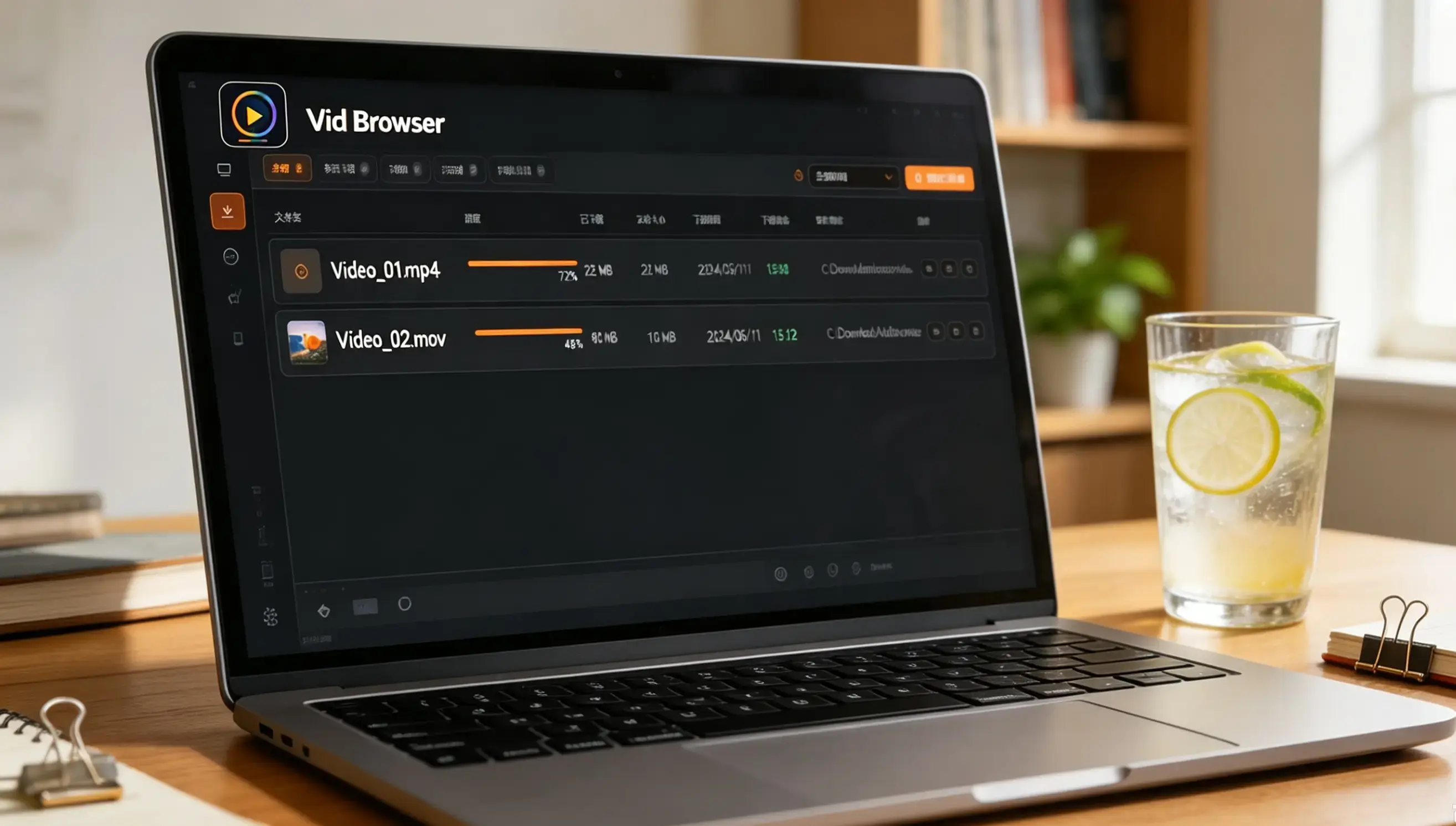
A desktop video browser such as VidBrowser is positioned as giving you a cleaner viewing experience on content you already have access to, and keeping the clips you want to keep organised locally. It does not change the boundary of use: how you use what you save, and whether you cross a line, is on you.
As for when to save, and how to file what you save, the pieces on when to save subscription content and organising a personal video library each offer an approach.
FAQ
If I subscribe to a creator, can I download their videos?
Under the platform's terms, usually not. OnlyFans is the clearest example: its official help centre states that the platform does not allow downloads and that copying content breaches the terms of service, and that a payment only buys a licence to watch. Whether it is technically possible and whether the terms allow it are two different questions.
If I only keep it on my own computer and never share it, is there a problem?
The risk is at its lowest, but that is not the same as being permitted — the content is still an unauthorised copy and still a breach at the contract level. In practice, personal, non-commercial, unshared offline viewing almost never reaches litigation; what pushes the risk up is the step where the content leaves your device.
Is it unlawful to send a video to a friend to watch together?
The nature of the act escalates noticeably. Forwarding, posting to a group or sharing a link is distribution to others and may infringe the rightsholder's distribution right — no longer "just watching it myself". Go further and upload it to a public site, sell it or use it to farm traffic, and you enter the criminal-risk band: in the US, copying works with a retail value above $1,000 within 180 days can be criminal even without any profit motive.